Thank you for your patience while we retrieve your images.
Visitors 3


1 of 5 photos
Thumbnails
Info
Categories & Keywords

Category:
Subcategory:
Subcategory Detail:
Keywords:Bow'd Davie, Crooked David, David Ritchie, David of Manor Water, Graham Riddell, Innerleithen, Manor, Peeblesshire, Scotland, Scottish Borders, Sir Walter Scott., Tweeddale, UK, character, event photographer, freelance photographer, home, landscape photographer, photographer, portrait photographer, sculpture, statue, stones, strength, the black dwarf
Photo Info

Dimensions4368 x 2912
Original file size12.8 MB
Image typeJPEG
Color spacesRGB
Date taken6-Apr-17 11:26
Date modified20-Apr-17 17:54
Shooting Conditions

Camera makeCanon
Camera modelCanon EOS 5D
Focal length21 mm
Max lens aperturef/4
Exposure1/125 at f/11
FlashNot fired, compulsory mode
Exposure bias0 EV
Exposure modeAuto
Exposure prog.Aperture priority
ISO speedISO 400
Metering modeUnknown
black-dwarf_2017-4107

black-dwarf_2017-4107

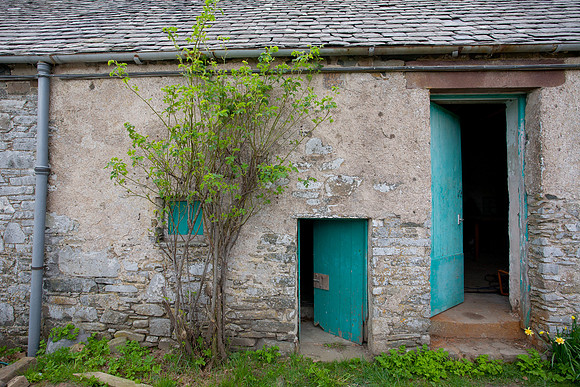
A statue of David Ritchie 'the Black Dwarf' of Kirkton Manor in Tweeddale, near Peebles in the Scottish Borders, is to his memory (1740–1811) and stands today (April 2017) in private grounds at Hallyards, commissioned by Andrew Clason (who bought Hallyards from the Campbells in 1836) and is still situated just in front of the main house which is near his former home and Manor Kirk churchyard where he is buried. He was three foot six, immensely strong with large upper body strength and arms which compensated for his dishevelled legs and disfigured feet which were wrapped in cloth as shoes were not of any use. He walked with the aid of a large stick and reputedly transported a massive heavy stone from the river Tweed to show his great strength which today can be seen in the roadside dyke in the area. He lived in an adapted cottage with a tiny door and his sister who lived next door but was of normal stature. Sir Walker Scott also visited him in 1797 and wrote a novel around him called The Black Dwarf. When he died his legs were removed and kept for medical study. His headstone was commissioned by W and R Chambers (publisher) in 1845.